-
Standard Range: Metric M1.0 > M52, Inch Oun > 2"
-
E-CATALOGUE



STAINLESS STEEL RETAINING RINGS AND CLIPS
Retaining Rings and Clips
Retaining Rings and Clips are fasteners fitted into a groove on a shaft or in a bore to create a shoulder that stops a component, bearing or other part from sliding axially off position. PTS's range includes internal and external circlips, E-clips, wire snap rings and adjusting shaft collars, each suited to different retention loads, groove types and installation methods.
Internal and External Circlips
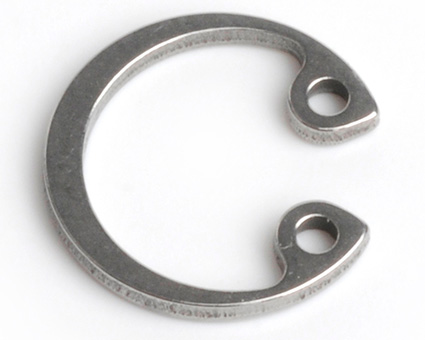
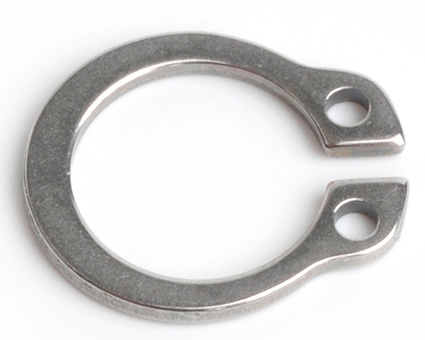
Internal Circlips DIN 472 fit into a groove machined inside a bore or housing, with the ring's outward spring force holding it in the groove and its inner edge providing the retaining shoulder. External Circlips DIN 471 do the reverse, fitting into a groove machined into a shaft, gripping inward, and presenting an outer shoulder to retain the component. Both types are fitted and removed using circlip pliers engaging the two lug holes.
E-Clips
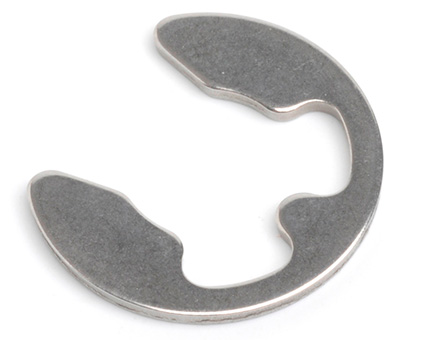
E-Clips DIN 6799 are pushed onto a shaft radially, from the side, rather than requiring the shaft end to be threaded through the ring first. This makes them much faster to fit than a circlip in assembly-line conditions, though the trade-off is a smaller contact area with the groove and generally lower retention capacity than a circlip of equivalent shaft diameter.
Wire Snap Rings
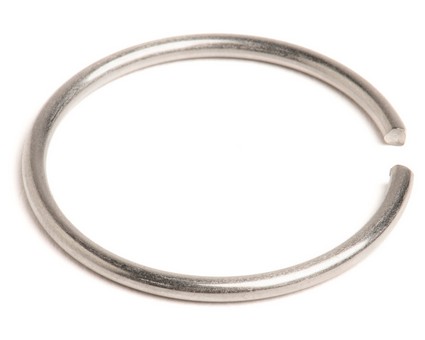
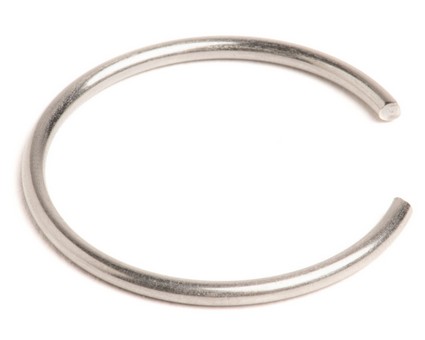
Wire Snap Rings for Shafts DIN 9925 and Wire Snap Rings for Bores DIN 9926 are formed from round wire rather than stamped from flat sheet like a standard circlip. The round-wire construction reduces stress concentration at the groove edge and gives a more even load distribution, which can suit applications with higher cyclic loading than a stamped ring is rated for.
Adjusting Shaft Collar
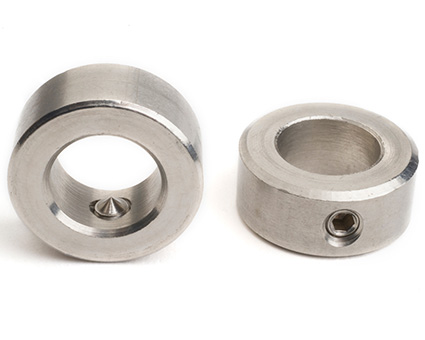
The Adjusting Shaft Collar DIN 705A fits around a shaft and is secured by clamping or a set screw rather than sitting in a groove, allowing it to be positioned anywhere along the shaft to set an axial stop point. Unlike circlips and clips, it is repositionable without needing a machined groove at a fixed location.
FAQs
What's the difference between an internal and external circlip?
An internal circlip fits inside a bore or housing and grips outward into a groove machined in the bore wall, while an external circlip fits around a shaft and grips inward into a groove machined into the shaft. The choice depends entirely on whether the component being retained needs to be stopped from moving out of a hole or off the end of a shaft.
What's the difference between an E-clip and a circlip?
An E-clip is fitted from the side of the shaft in a single push motion, making it much quicker to install than a circlip, which must be opened with pliers and threaded over the shaft end or into the bore. The trade-off is that E-clips generally have a smaller contact area with the groove and are rated for lower retention loads than an equivalent circlip.
What's the difference between a wire snap ring and a stamped circlip?
A wire snap ring is formed from round wire, giving it a smoother stress distribution around the groove, while a standard circlip is stamped from flat sheet material. Wire snap rings are often preferred in applications with higher cyclic or shock loading where the stamped ring's sharper internal edge could be a stress-concentration point.