-
Standard Range: Metric M1.0 > M52, Inch Oun > 2"
-
E-CATALOGUE



STAINLESS STEEL NUTS
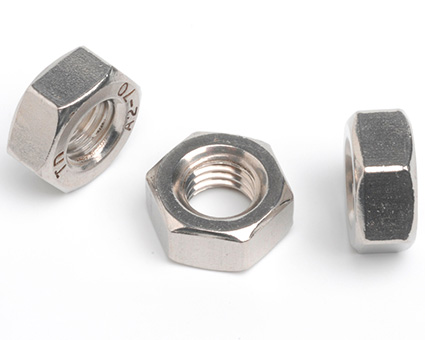
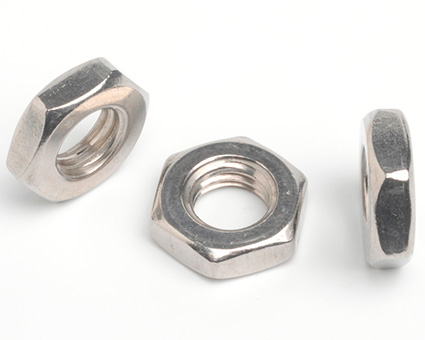
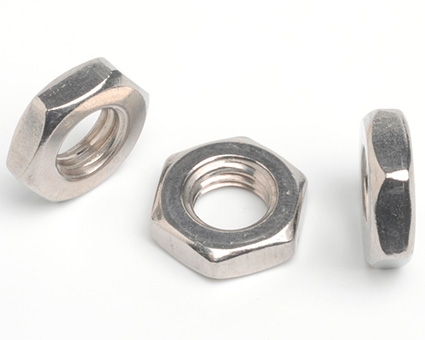
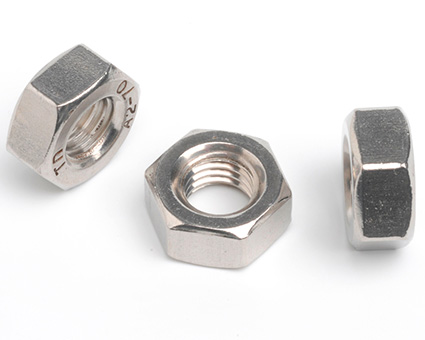
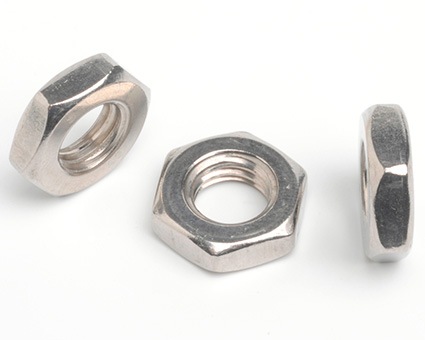
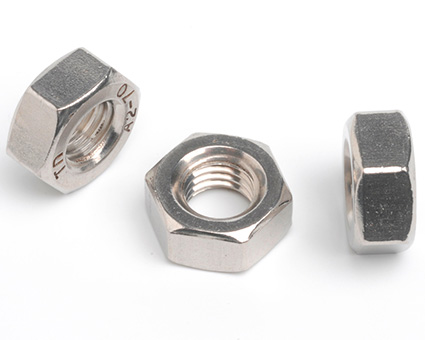
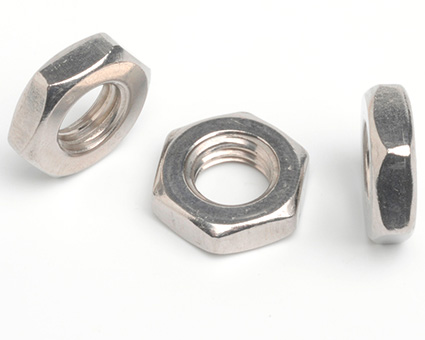
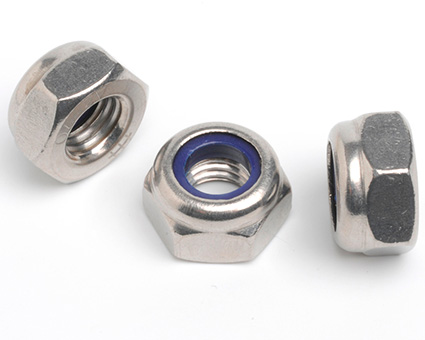
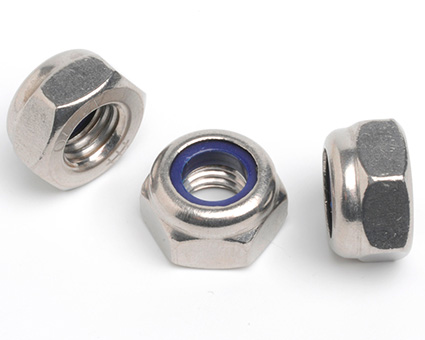
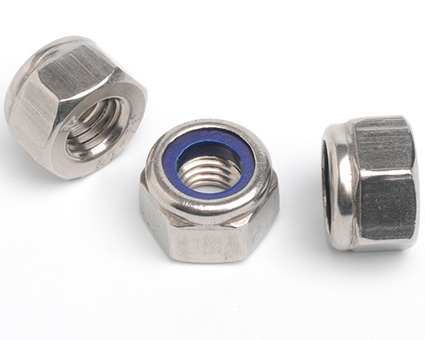
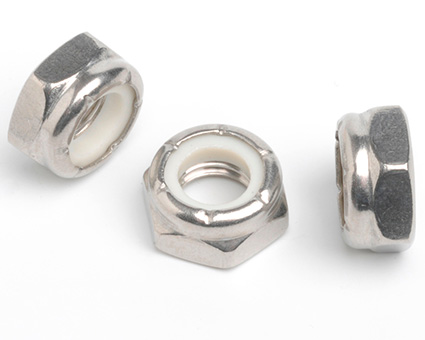
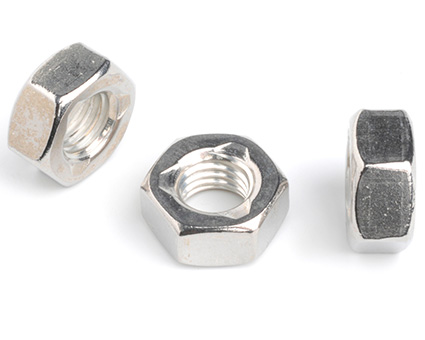
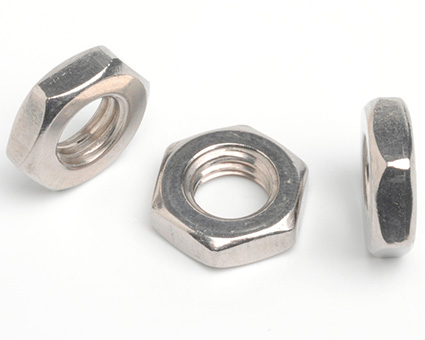
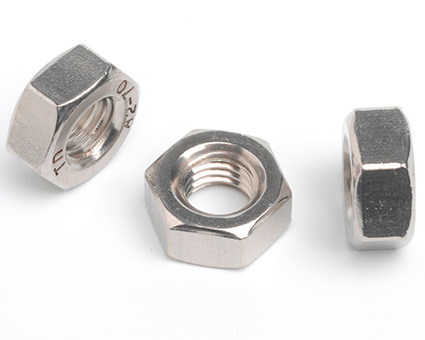
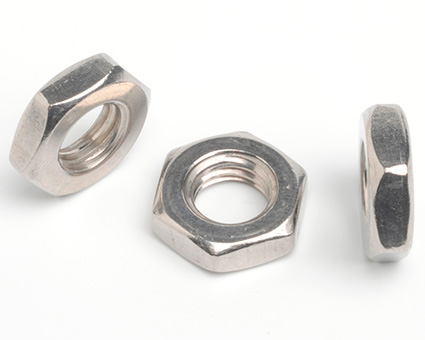
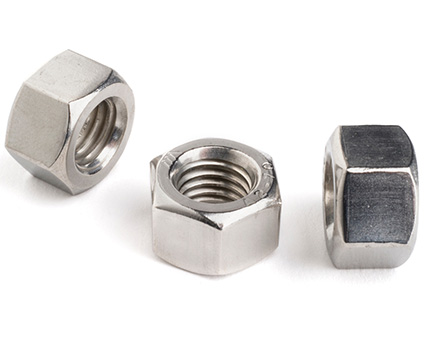
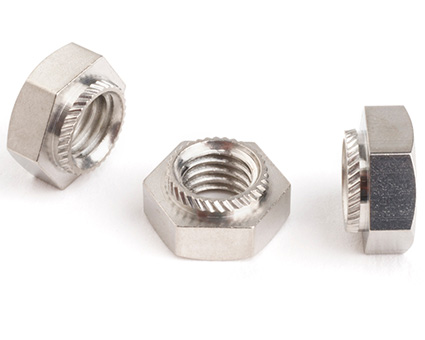
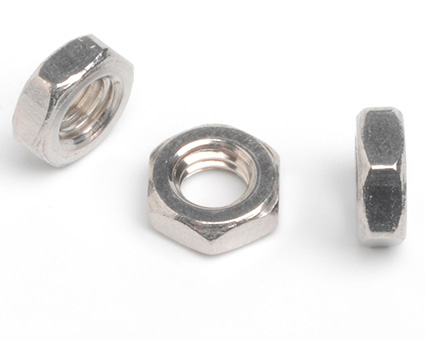
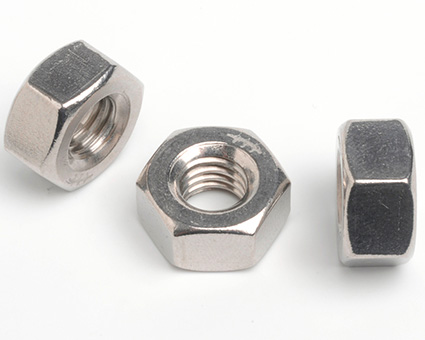
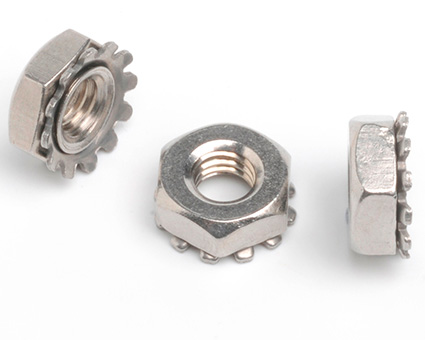
Nuts
A nut is a fastener with a threaded hole through its centre, designed to be run onto a bolt, screw or threaded rod to clamp two or more components together. Most nuts rely on friction between the mating threads to stay in place, though a large sub-group is built specifically to resist loosening under vibration. PTS stocks nuts across the standard hexagon families plus locking, flanged, domed and specialist shapes, largely interchangeable with our Hexagons range for bolt pairing and typically fitted alongside Washers to spread bearing load.
Materials
The majority of the range is manufactured in A2 (304-equivalent) and A4 (316-equivalent) stainless steel, giving good general corrosion resistance (A2) or improved resistance in marine and chemical environments (A4). Selected lines are also available in Duplex and Titanium Grade 5 for higher-specification applications; check availability for the specific nut type and size required.
Standard Hexagon Full and Thin Nuts
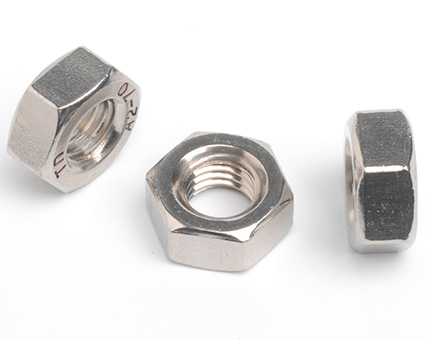
The core of the range is the plain hexagon nut, stocked as Hexagon Full Nuts and Hexagon Thin Nuts, with equivalents across the major standards bodies: DIN 936 (thin), DIN 934/ISO 4032 and ISO 4035, UNI 5587 (heavy series), DIN 6330 Type B, and the ASME B18.2.2 Small Pattern and Heavy Series for imperial applications. Fine thread and left-hand thread variants (DIN 934/DIN 439) are also available for applications where a coarser standard pitch, or a right-hand-threaded mating part, isn't suitable. Fine-pitch equivalents (ISO 8673/8675) cover the same full/thin distinction on a finer thread form.
Locking Nuts
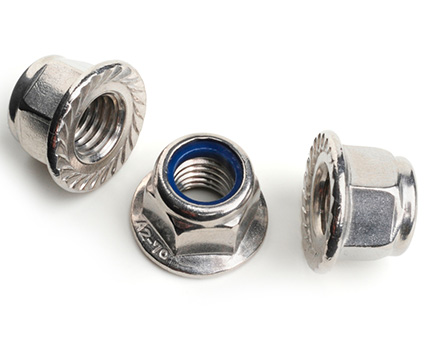
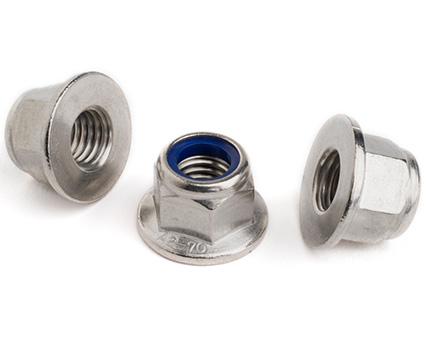
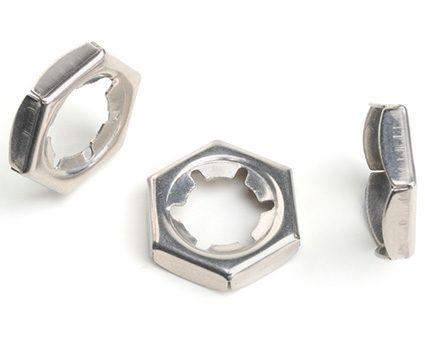
Where vibration could back a plain nut off, PTS stocks both nylon insert and all-metal locking types. Nylon Insert Nuts (including the fine-pitch DIN 985, high-type DIN 982 and thin-type ASME B18.16.6 versions) use a captive nylon collar to grip the bolt thread. Where the nylon's temperature or chemical resistance is a limiting factor, Allmetal Self Locking Nuts (Art.980) and Self Locking Counter/PAL Nuts (DIN 7967) achieve the same resistance to loosening through deformed or eccentric all-metal threads instead.
Flanged Nuts
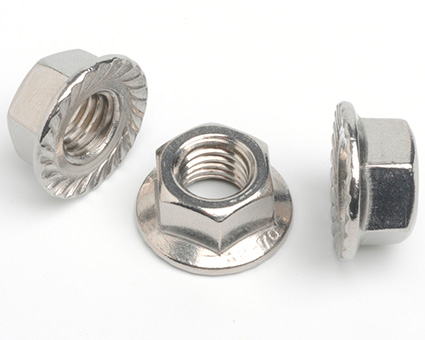
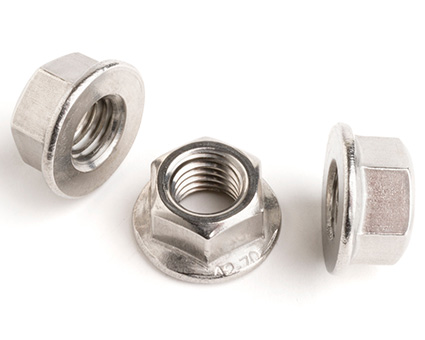
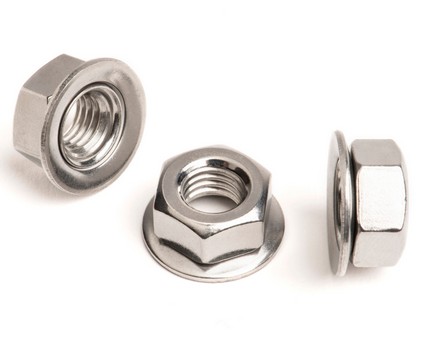
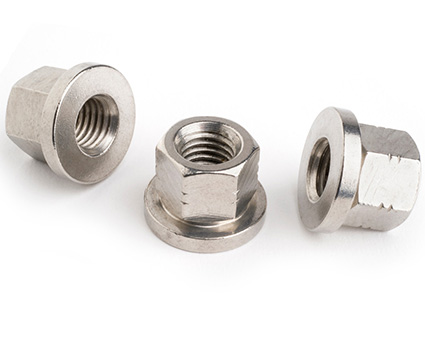
Flanged nuts combine a hexagon nut with an integral washer face, removing the need for a separate washer and spreading load over a wider bearing area. The range includes Serrated and Non-Serrated Flanged Nuts (DIN 6923), nylon-insert flanged versions in both serrated and non-serrated form (DIN 6926), Comby-Nuts with a captive conical washer, the Hexagon Collar Nut (DIN 6331), and KEP Nuts, which pair a serrated flange with a captive free-spinning washer for one-part assembly.
Domed and Cap Nuts
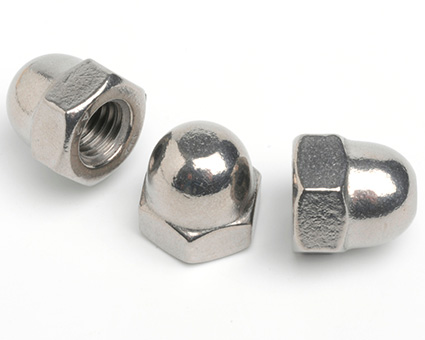
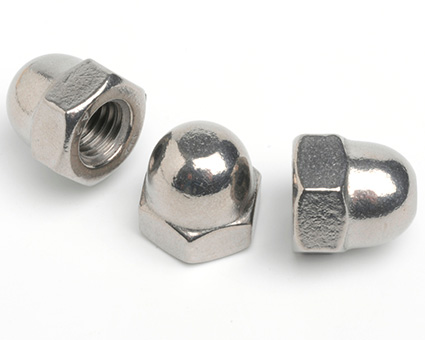
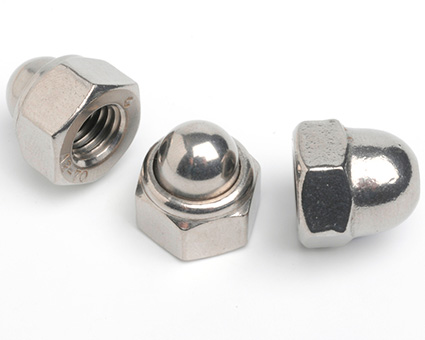
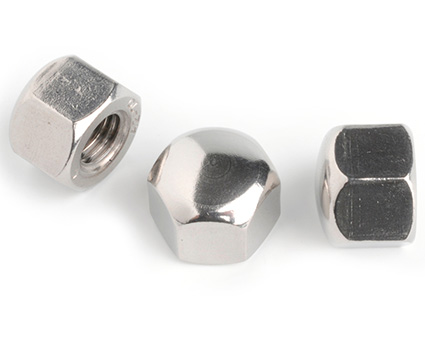
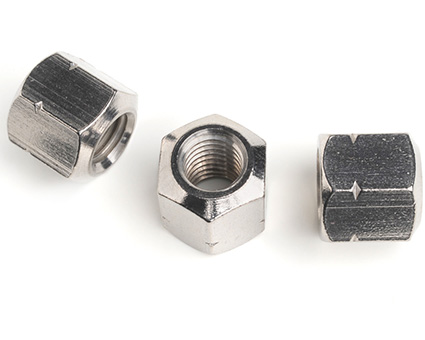
Domed Nuts and Fine Thread Hexagon Domed Nuts enclose the exposed end of the bolt thread for a finished appearance and to guard against snagging or injury. A nylon-insert domed version (DIN 986) adds locking performance, while Hexagon Cap Nuts (DIN 917) offer a taller, more enclosed dome profile.
Square, Wing and Slotted Nuts
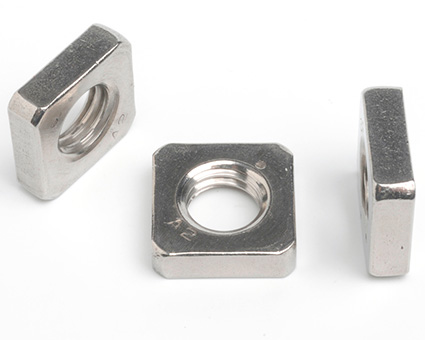
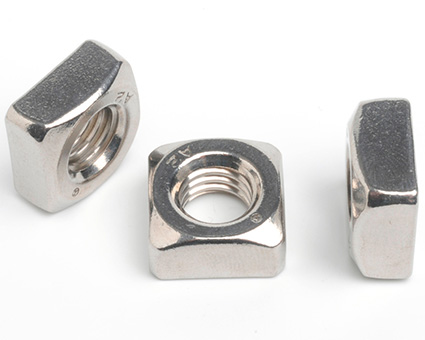
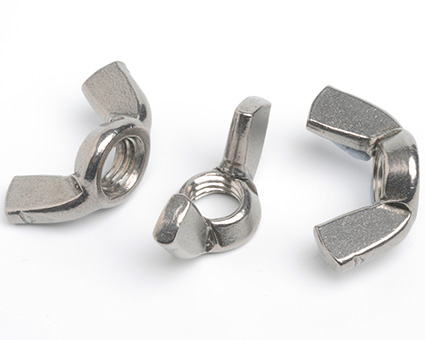
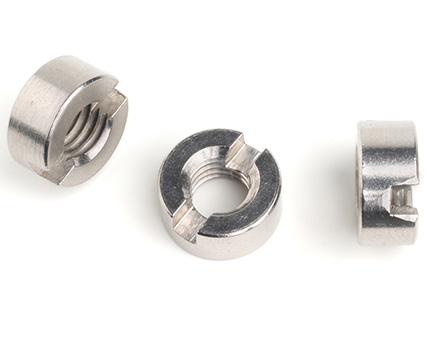
Beyond the hexagon family, PTS stocks Square Nuts (DIN 562) and Chamfered Square Nuts for applications needing a flat-sided nut, Wing Nuts for tool-free hand tightening, and Slotted Round Nuts (DIN 546), which are tightened with a C-spanner or hook wrench and commonly used where a low profile or fine positional adjustment is needed.
Castle and Weld Nuts
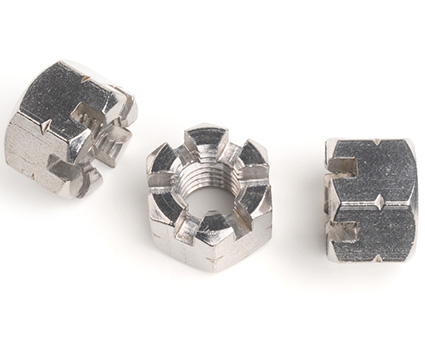
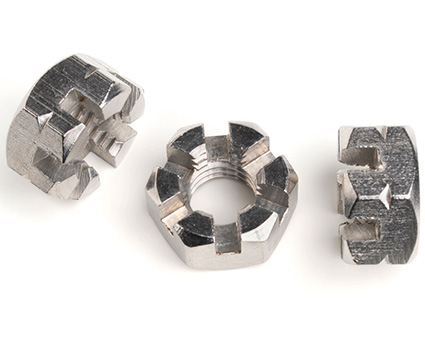
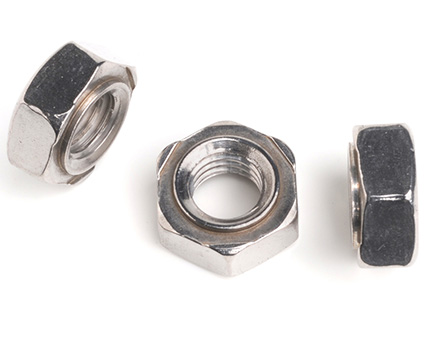
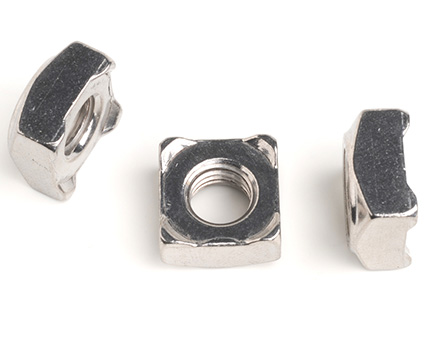
Hexagon Castle Nuts (DIN 935) and the thin-type equivalent (DIN 937) have slots cut into the top face so a split pin can pass through a drilled bolt shank, locking the nut mechanically rather than by friction. Hexagon Weld Nuts (DIN 929) and Square Weld Nuts (DIN 928) carry projections designed to be spot-welded to a parent component, creating a permanent captive thread.
Connector, Sleeve and Panel Nuts
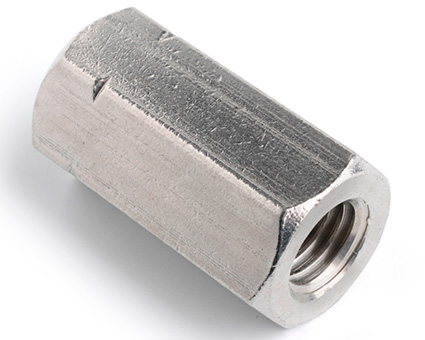
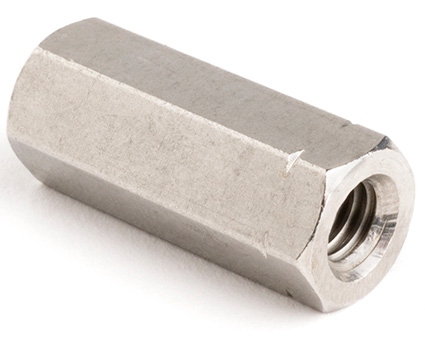
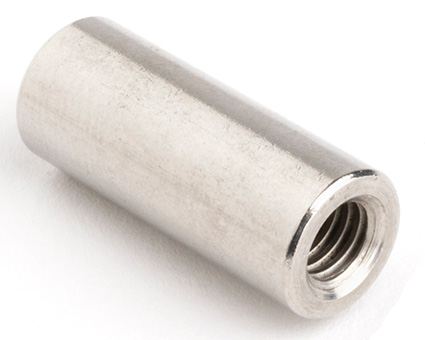
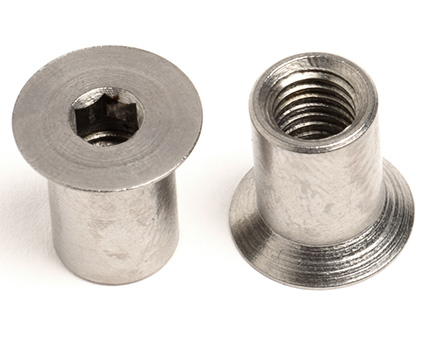
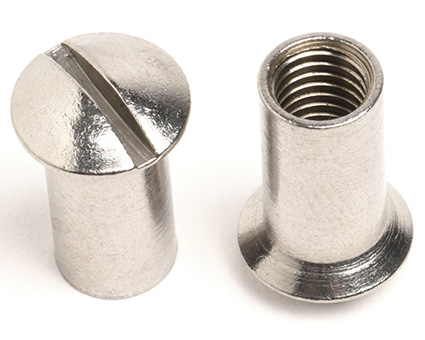
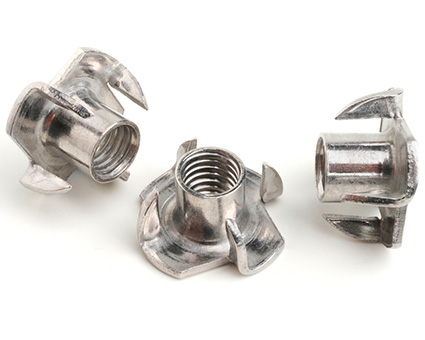
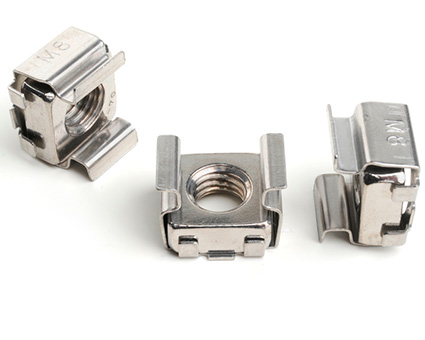
This group covers nuts used to join or capture components rather than terminate a bolt: Studding Connector Nuts (DIN 6334), Hexagon Connector Nuts and Round Connector Nuts for joining threaded rod; Socket Countersunk and Slot Raised Countersunk Sleeve Nuts for flush fixings; the 4 Prong Tee-Nut and Cage Nuts for fixing into wood or sheet panels; and Hexagon Insert Press Nuts, which are pressed into a thin sheet material to provide a permanent internal thread.
FAQs
What's the difference between A2 and A4 stainless steel nuts?
A2 is an 18/8 chromium-nickel stainless steel with good general corrosion resistance, suitable for most indoor and everyday outdoor use. A4 adds molybdenum to the alloy, which significantly improves resistance to chlorides and salts, making it the better choice for marine environments, coastal locations, and applications exposed to de-icing salts or chemical washdown. A4 typically costs more than A2, so it's usually specified only where the extra resistance is actually needed.
When should I use a thin nut instead of a full nut?
A full nut (DIN 934/ISO 4032) has thread engagement matched to the bolt diameter and is intended to carry the full rated load of the fastener on its own. A thin nut (DIN 936/ISO 4035) is noticeably shallower and is normally used as a locknut run down against a full nut, or wherever stack height is restricted and the nut isn't the primary load-bearing element. Thin nuts shouldn't generally be used as the sole nut on a safety-critical joint.
Should I use a nylon insert locknut or an all-metal locknut?
Nylon insert (nyloc) nuts are the standard choice for general vibration resistance and are effective across a wide working temperature range, but the nylon insert degrades and loses grip above roughly 100-120°C and can be attacked by certain solvents and chemicals. All-metal locking nuts, such as Allmetal Self Locking Nuts and PAL Nuts, achieve their locking action through the metal thread form itself, so they hold up in high-temperature or chemically aggressive environments where a nylon insert would fail.
Do you stock imperial (UNC/UNF) nuts?
Yes. Imperial sizes are primarily covered by the ASME B18.2.2 Small Pattern and Heavy Series Hexagon Nuts, alongside the ASME B18.16.6 thin-type nylon insert locknut. Most of the wider specialist range - flanged, domed, castle and connector nuts - is stocked in metric only, so check availability before specifying imperial for those items.