-
Standard Range: Metric M1.0 > M52, Inch Oun > 2"
-
E-CATALOGUE


STAINLESS STEEL LIFTING
Lifting
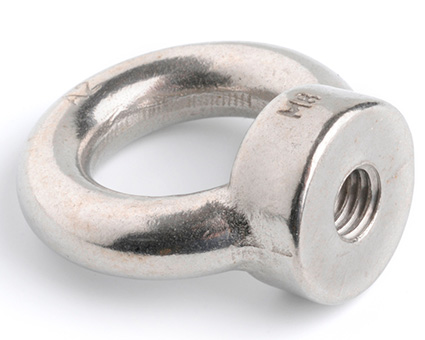
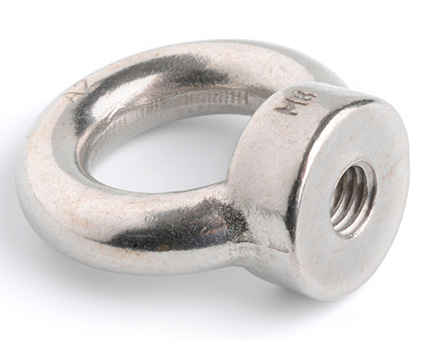
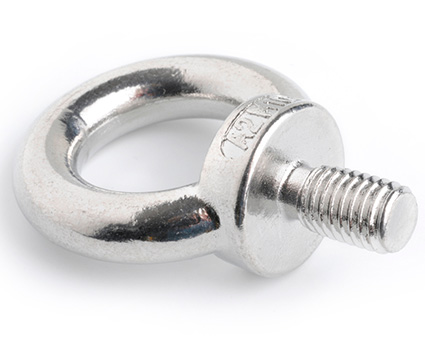
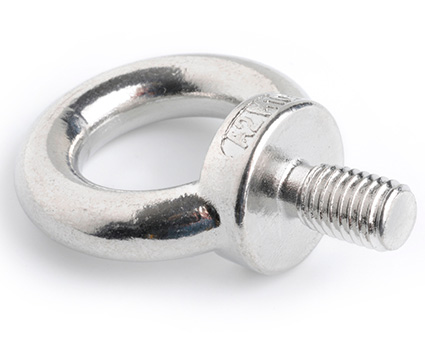
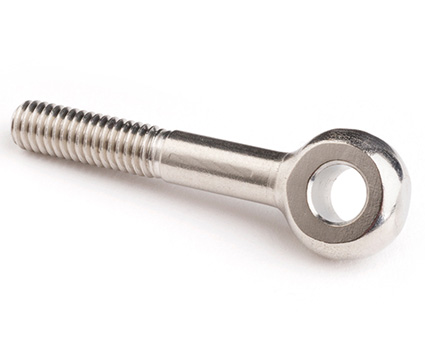
Lifting eye bolts and eye nuts provide a fixed attachment point for shackles, hooks and slings, allowing a load to be connected to a crane, hoist or other lifting equipment. The eye is threaded into a tapped hole in the load (bolts) or fitted onto a threaded stud or shaft (nuts), giving a secure anchor point for the lift. PTS's range spans forged DIN lifting eye bolts and nuts for certified lifting duty, cast Art. equivalents for general and lighter-duty applications, and standard DIN 444B eye bolts, which are engineering components rather than lifting equipment. Selecting the correct type for the application is essential, as these components are not interchangeable.
Materials
Lifting eye bolts and nuts in this range are manufactured from Stainless Steel, offering corrosion resistance for use in demanding or exposed environments. As with all lifting equipment, the manufacturing process (forged or cast) has a direct bearing on the component's suitability for genuine lifting duty — see below.
Forged Lifting Eye Bolts (DIN 580)
DIN 580 eye bolts are drop-forged, a manufacturing process that shapes the metal under high pressure while it is still solid. This produces a denser, more consistent internal grain structure than casting, which follows the contours of the component and gives forged parts greater structural integrity under load. DIN 580 is the specification manufacturers and engineers turn to for genuine, certified lifting duty, including dynamic and overhead lifting where the load is suspended or in motion.
Forged Lifting Eye Nuts (DIN 582)
DIN 582 eye nuts are the forged nut equivalent of the DIN 580 eye bolt, designed to be fitted onto a threaded stud, shaft or rod end to create a certified lifting point. Like DIN 580, the forging process gives DIN 582 nuts the grain structure and strength consistency required for genuine lifting applications, and they are typically specified alongside DIN 580 bolts within the same lifting system.
Cast Lifting Eye Bolts & Nuts (Art. 580/582)
The Art. 580 and Art. 582 ranges are the cast equivalents of the forged DIN 580 and DIN 582 components. Casting is a lower-cost manufacturing process suited to general engineering and lighter-duty fixing or tie-down applications. Cast components do not have the same grain structure as their forged counterparts and are not the specification for certified lifting duty — where a genuine lifting application is required, the forged DIN 580/582 range should be used instead.
Standard Eye Bolts (DIN 444B)
DIN 444B eye bolts are general engineering components, commonly used for applications such as tensioning, guy-wire anchoring or as a fixed pulling point. They are not manufactured or certified to a lifting standard and must not be used as a substitute for the forged DIN 580 lifting range — see the FAQ below for a full explanation.
FAQs
What's the difference between cast and forged eye bolts/nuts for lifting duty?
Forging shapes the metal under high pressure while solid, producing a denser and more consistent internal grain structure than casting. This gives forged components (DIN 580 eye bolts and DIN 582 eye nuts) the strength and structural reliability required for genuine, certified lifting duty. Cast components (Art. 580 and Art. 582) are suited to general engineering and lighter-duty use, but are not the correct specification where a certified lifting point is required.
Can a standard eye bolt (DIN 444B) be used for lifting?
No. DIN 444B is a general engineering eye bolt, not a piece of lifting equipment, and it is not manufactured or certified to a lifting standard. It should never be substituted for the forged DIN 580 lifting range in any dynamic or overhead lifting application. Using a DIN 444B eye bolt to lift a suspended load is a safety risk — the forged DIN 580 (bolts) or DIN 582 (nuts) range is the correct specification for that purpose.
What should be checked before using any lifting eye bolt or nut?
Before use, always check the manufacturer's stated working load limit for the specific component, size and configuration in its certified documentation, and never exceed it. The load angle should also be checked, as pulling at an angle rather than in-line with the eye reduces the safe capacity of the fitting. Finally, the component should be visually inspected before every lift for signs of wear, deformation, corrosion or thread damage, and taken out of service if any defect is found.
Does the eye need to be fully seated to take a load correctly?
Yes. Forged lifting eye bolts and nuts are designed to have their shoulder or collar drawn down fully flush against the mating surface before a load is applied. An eye bolt or nut that is not fully seated can allow the load to pull at an incorrect angle, which affects the safe working capacity of the fitting — always tighten fully home before use.