-
Standard Range: Metric M1.0 > M52, Inch Oun > 2"
-
E-CATALOGUE



STAINLESS STEEL PIPE PLUGS AND NUTS
Pipe Plugs and Nuts
Pipe Plugs are threaded fittings used to seal or blank off an unused threaded port in a pipe, manifold or housing, while a Pipe Nut is used to join or cap pipe-threaded fittings rather than to fasten machine components together in the way a standard hexagon nut would. PTS stocks socket and hexagon-head pipe plugs alongside pipe nuts for these fluid and gas system applications.
Socket Pipe Plugs
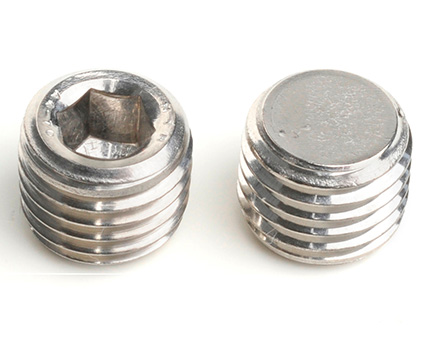
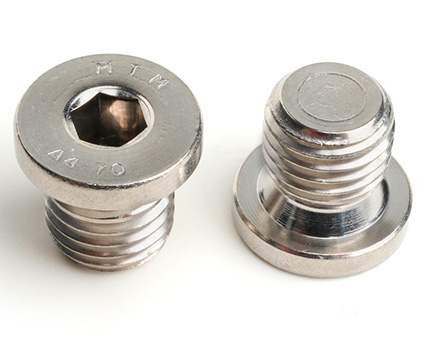
Socket Pipe Plugs DIN 906 and Socket Pipe Plugs with Collar DIN 908 are fitted and removed using an internal (Allen/socket) key rather than an external spanner, which suits recessed or space-restricted ports. The DIN 908 variant adds a collar beneath the head, increasing the bearing surface against the port face for a more even seal.
Hexagon Head Pipe Plugs
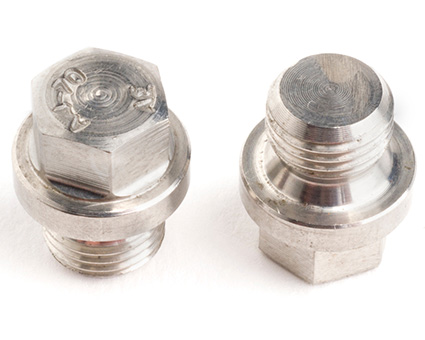
Hexagon Head Pipe Plugs DIN 910 have an external hexagon head, fitted and removed with a standard spanner rather than an internal key, and are used wherever spanner access to the port is available and preferred over a socket key.
Pipe Nuts
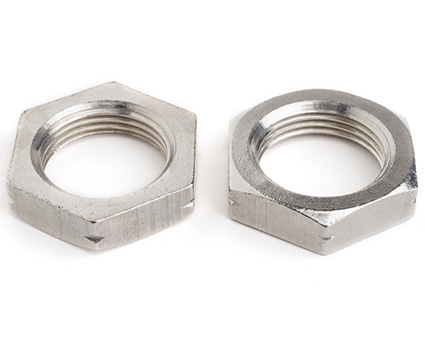
Pipe Nuts DIN 431 are used to join or cap pipe-threaded components, rather than acting as a standard machine nut on a bolt. They are matched to the pipe thread form of the fitting they're used with — PTS's DIN 431 pipe nuts are supplied to BSP (British Standard Pipe) thread form, in line with standard practice for this type of fitting.
FAQs
What's the difference between a socket pipe plug and a hexagon head pipe plug?
A socket pipe plug (DIN 906 or DIN 908) is fitted and removed with an internal Allen key, making it suitable for recessed ports or where spanner access is limited. A hexagon head pipe plug (DIN 910) has an external hex head for use with a standard spanner, generally chosen where the port is more accessible and a lower profile inside the bore isn't required.
What is a pipe nut used for?
A pipe nut is used to join or cap pipe-threaded fittings within a fluid or gas system, rather than to fasten two flat components together in the way a standard hexagon nut does. It's matched to the pipe thread of the fitting it's being used with rather than a machine screw thread.
What's the difference between DIN 906 and DIN 908 socket pipe plugs?
Both are socket-head pipe plugs fitted with an internal key, but the DIN 908 variant has an additional collar beneath the head that increases the bearing surface against the port face, helping to distribute load and improve sealing compared with the plain DIN 906 design.