-
Standard Range: Metric M1.0 > M52, Inch Oun > 2"
-
E-CATALOGUE



STAINLESS STEEL THREADED RODS AND STUDS
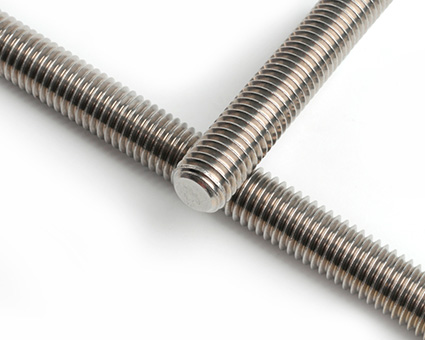
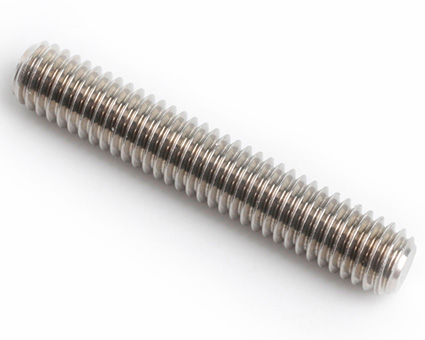
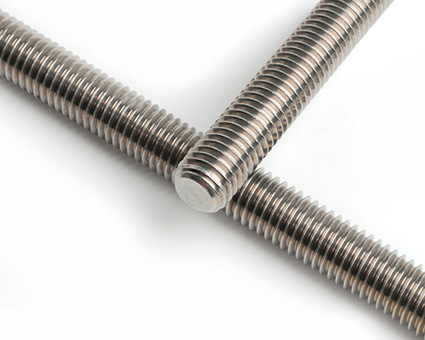
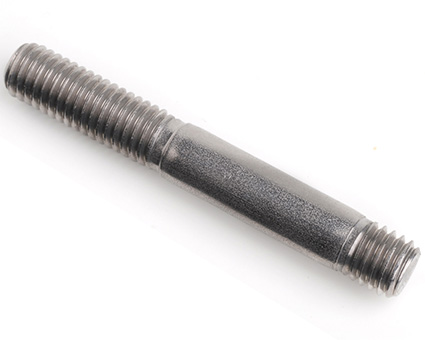
Threaded Rods and Studs
Threaded Rods and Studs are fasteners with external threads used to join components together, either by running a nut down a continuous threaded length or by screwing a fixed-length stud into a tapped hole to provide a permanent threaded stub for a nut to be fitted onto later. PTS supplies both standard threaded rod, left-hand threaded rod, double-end studs to two different engagement lengths, and threaded weld studs for permanently fixing a threaded point to a flat surface.
Materials
Threaded Rods and Studs in this range are available in stainless steel to A2 (304-equivalent) and A4 (316-equivalent) specification, with the grade varying by product line, so check the specific product page for the grade stocked for that item.
Threaded Rods and All Thread Studs
Threaded Rods and All Thread Studs DIN 976-1 are fully threaded along their entire length and supplied in stock lengths for cutting to size on site, allowing a nut to be fitted or removed at any point along the rod. They are typically used for suspension, tie rods, and general fixing where the joint position isn't fixed in advance.
Left Hand Threaded Rods
Left Hand Threaded Rods DIN 976-1 are threaded in the reverse direction to standard rod, so a nut tightens by turning anticlockwise instead of clockwise. They're specified wherever a mechanism needs to resist unwinding under rotation, such as one end of a turnbuckle or a component that is itself subject to rotational torque in the "loosening" direction of a standard thread.
Double End Studs
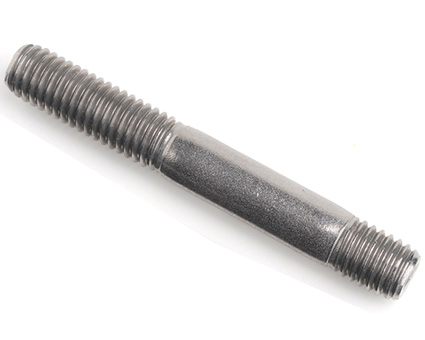
Double End Studs end 1xd DIN 938 and Double End Studs end 1.25xd DIN 939 are fixed-length studs with a threaded section at each end and a plain centre section, permanently screwed into a tapped hole at one end so that a nut can be fitted to the exposed end. The "1xd" and "1.25xd" designations refer to the length of the thread engaged into the tapped hole, expressed as a multiple of the stud's nominal diameter, with DIN 939 giving a longer engagement for a more secure fixing into softer materials.
Threaded Weld Studs
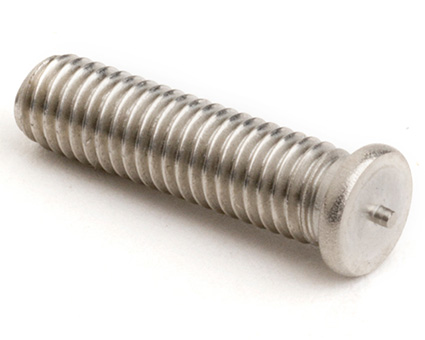
Threaded Weld Studs ISO 13918 are studs designed to be permanently fused to a flat metal surface using a stud welding process, providing a threaded fixing point on a component where drilling and tapping isn't practical or desirable.
FAQs
What's the difference between a threaded rod and a double-end stud?
A threaded rod is threaded continuously along its full length and can be cut to any length, with nuts fitted anywhere along it. A double-end stud is a fixed length with threaded sections only at each end, one of which is permanently fitted into a tapped hole, leaving a defined engagement length and a plain or exposed section for the mating part.
What is a threaded weld stud used for?
A threaded weld stud is welded directly onto a flat metal surface to create a permanent threaded fixing point without needing to drill and tap the base material. This is common in fabrication and sheet metal work where access for tapping isn't available or where a clean external surface finish needs to be maintained.
Why would left-hand thread be specified instead of standard thread?
Left-hand thread is specified when a standard right-hand thread would work loose under the direction of rotation the assembly experiences in use, for example on one side of a turnbuckle or on rotating machinery. It ensures the nut or fitting tightens rather than loosens as the connected component turns.
What's the difference between DIN 938 and DIN 939 double end studs?
Both are double-end studs with one end designed for permanent installation into a tapped hole, but DIN 939 has a longer thread engagement length (1.25 times the nominal diameter) compared to DIN 938 (1 times the diameter). The longer engagement of DIN 939 is generally used when studs are fitted into lower-strength materials that need a greater thread contact area to hold securely.