-
Standard Range: Metric M1.0 > M52, Inch Oun > 2"
-
E-CATALOGUE



STAINLESS STEEL KNURLED FASTENERS
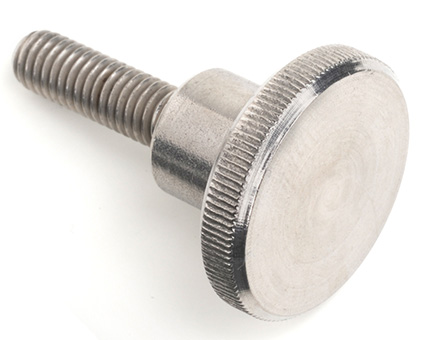
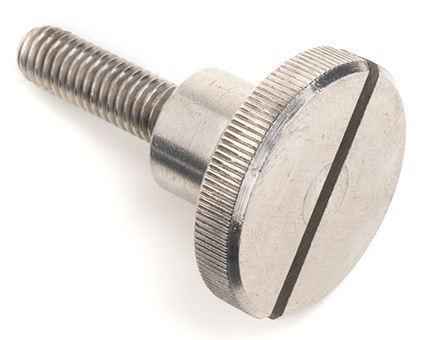
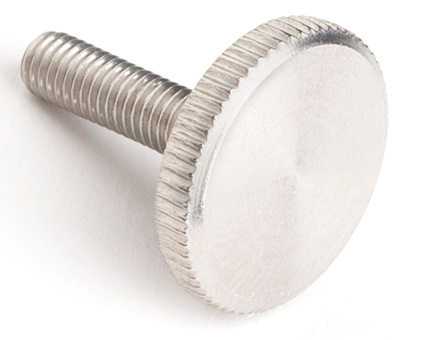
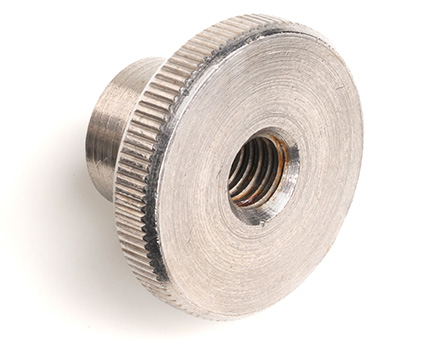
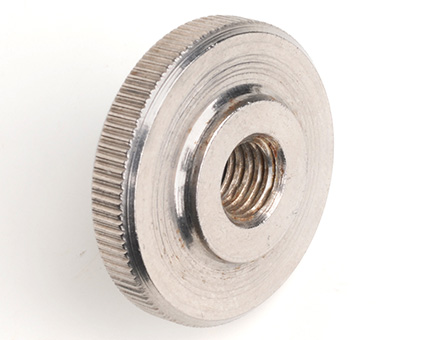
Knurled Fasteners
Knurled Fasteners have a series of fine ridges cut or rolled into their outer edge, giving a textured grip that allows the fastener to be tightened and loosened by hand, without tools. PTS's range covers both knurled thumb screws, used in place of a standard screw, and knurled thumb nuts, used in place of a standard hex nut.
Materials
Knurled fasteners are available in A2 and A4 stainless steel.
Thumb Screws
Knurled Thumb Screws DIN 464 have a tall, fully knurled head designed to be gripped and turned entirely by hand. Knurled Thumb Screws with Slot DIN 465 add a screwdriver slot across the top of the same head, so the screw can still be finger-tightened for routine use but driven with a screwdriver if extra torque is occasionally needed. Knurled Thumb Screws Thin Type DIN 653 use a shorter, lower-profile head than the standard DIN 464, for applications where space above the joint is limited.
Thumb Nuts
Knurled Thumb Nuts High Type DIN 466 have a tall, domed knurled body, giving a larger gripping surface for hand tightening. Knurled Thumb Nuts Thin Type DIN 467 use a shorter, flatter body, closer in depth to a standard hex nut, for use where clearance is restricted.
FAQs
When should I use a knurled thumb screw instead of a standard screw?
A knurled thumb screw is used wherever a fastener needs to be adjusted or removed regularly by hand without reaching for a tool — for example, adjustable guards, access panels, jigs and fixtures, or settings that get changed in normal use. A standard screw is a better choice for a joint that's fitted once and left in place, since it can be tightened to a higher, more consistent torque with a tool. Because they're hand-tightened, knurled thumb screws aren't suited to joints that need a specific, high clamping force.
What's the difference between the thin type and high type thumb nut?
Knurled Thumb Nuts High Type DIN 466 have a taller body, giving more gripping surface and making them easier to turn by hand, particularly in larger sizes or where gloves are worn. Knurled Thumb Nuts Thin Type DIN 467 have a shorter body, closer in depth to a standard hex nut, and are used where axial clearance is limited and a lower-profile fastener is needed. The choice generally comes down to available space versus ease of grip.
Why would I choose the slotted version (DIN 465) over the plain knurled thumb screw?
Knurled Thumb Screws with Slot DIN 465 are used where the screw is normally finger-tightened but occasionally needs more torque than hand pressure can provide, such as at initial installation or once a joint has become stiff. The slot lets a flat screwdriver be used for that occasional extra torque, while day-to-day adjustment is still done by hand via the knurled head.