-
Standard Range: Metric M1.0 > M52, Inch Oun > 2"
-
E-CATALOGUE



STAINLESS STEEL PINS AND KEYS
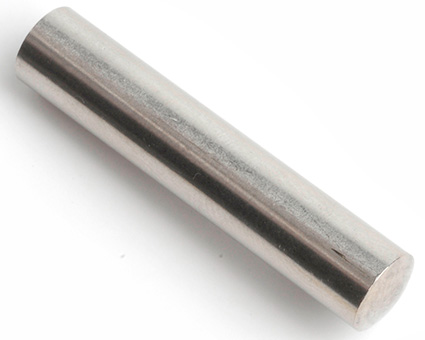
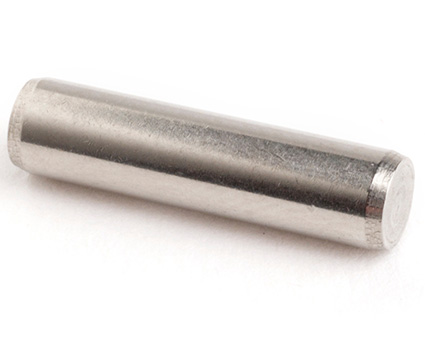
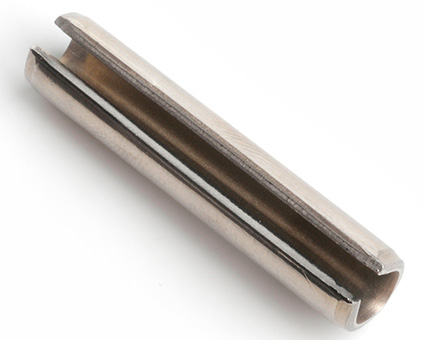
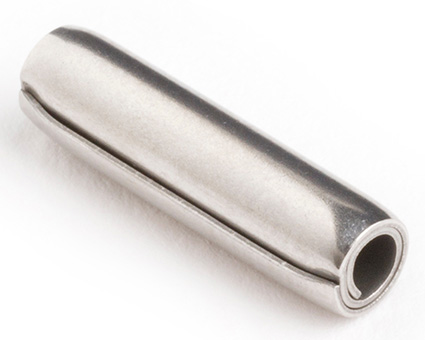
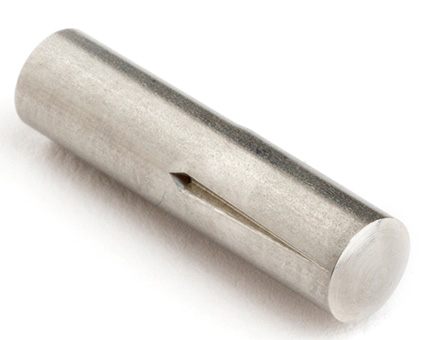
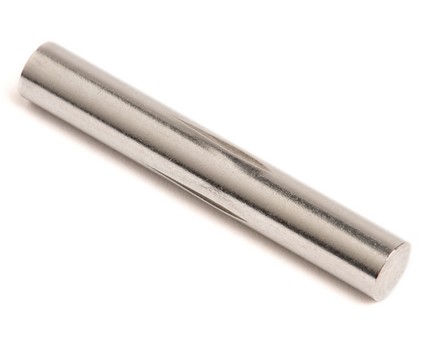
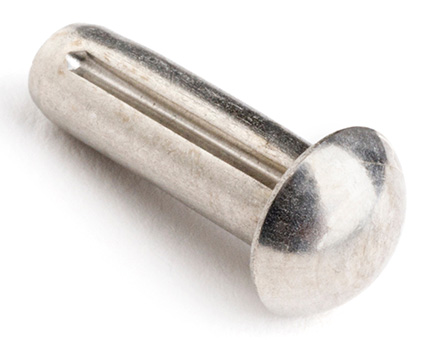
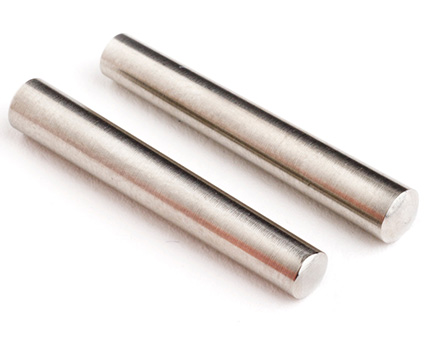
Pins and Keys
A pin is a solid, generally cylindrical or tapered component used to locate, secure or align two or more parts, most commonly by passing through drilled holes in mating components. Keys serve a related but distinct function: rather than aligning parts, they transmit rotational drive between a shaft and a hub. PTS's Pins and Keys range covers precision dowels, self-retaining spring and grooved pins, taper pins, split pins and parallel keys, giving you options for both accurate location work and torque-transmission applications.
Materials
Pins and Keys in this range are available in stainless steel, generally to A2 (304-equivalent) or A4 (316-equivalent) specification depending on the individual product line, so check the specific product page for the grade stocked for that line.
Dowel Pins
Dowel Pins and Dowel Pins ISO 2338A are precision-ground cylindrical pins used where accurate, repeatable location between two components is required, typically in jigs, fixtures and machine assemblies. They are manufactured to tight tolerances so that a hole-and-pin fit can be relied on to position parts consistently, rather than to absorb any variation in hole size.
Spring and Roll Pins
Slotted Spring Pins and Roll Pins ISO 8750 are tubular pins with a longitudinal slot that allows the pin to compress slightly on insertion. This gives them a self-retaining spring action in the hole, so they grip the bore without needing a separate locking feature, and they can tolerate more variation in hole diameter than a solid dowel pin.
Grooved Pins
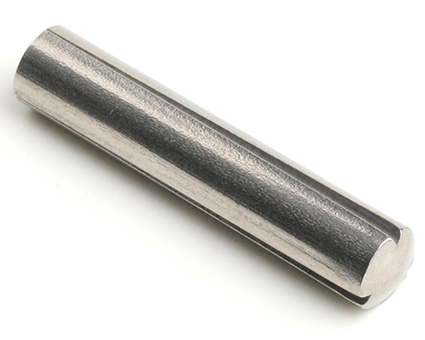
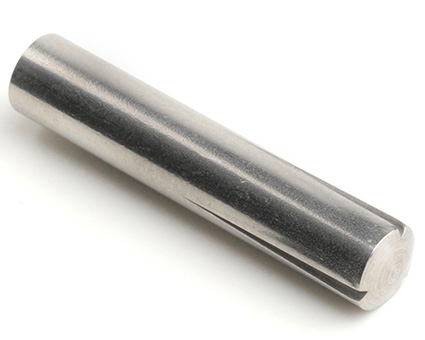
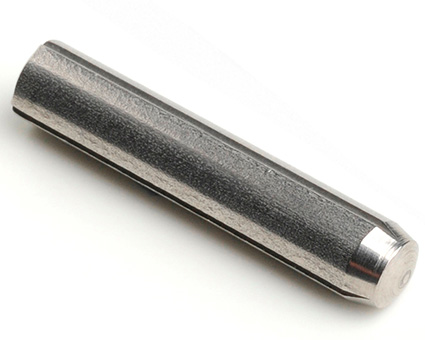
This is the largest subgroup in the range, covering Full Length Taper Grooved Pins DIN 1471, Half Length Taper Grooved Pins DIN 1472, Full Length Parallel Grooved Pin DIN 1473, Half Length Reverse Taper Grooved Pins DIN 1474, Third Length Centre Groove Pins DIN 1475 and Round Headed Grooved Pins DIN 1476. Each has three longitudinal grooves rolled or pressed into the pin surface, which raises material above the nominal pin diameter and creates an interference fit when driven into a plain hole. The different DIN references reflect where the grooves sit along the pin's length (full, half or third length) and whether the profile is straight, tapered or reversed, which affects how the pin locks and where it can be driven from.
Taper Pins and Split Pins
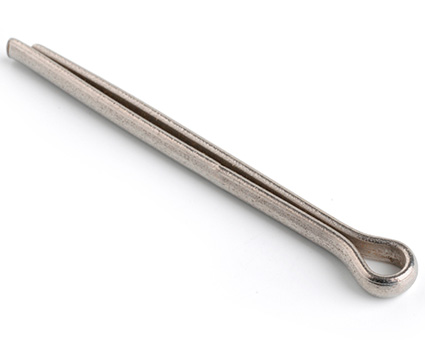
Taper Pins DIN 1 have a slight, consistent taper along their length and are driven into a matching reamed taper hole, producing a very secure, self-locking fit that resists loosening under vibration. Split Pins DIN 94 work differently: they are pushed through a cross-drilled hole, typically in a bolt, shaft or castle nut, and the two legs are then bent apart to prevent the pin from working loose, commonly used to lock a castle nut in place on a shaft or axle.
Parallel Keys
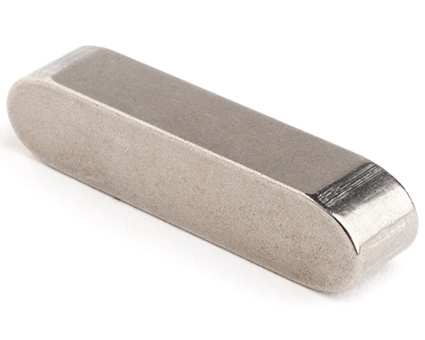
Parallel Keys DIN 6885A are rectangular-section keys fitted into matching keyways machined into a shaft and hub, used to transmit rotational torque between the two components while still allowing the hub to be removed for maintenance.
FAQs
What's the difference between a dowel pin and a grooved or spring pin?
A dowel pin is a solid, precision-ground pin designed for accurate location between components, relying on a close-tolerance fit rather than any compression or grip. A grooved or spring pin, by contrast, is designed to compress slightly on insertion and grip the hole itself, making it self-retaining and more tolerant of variation in hole size, but less precise for location purposes.
What is a taper pin used for?
A taper pin is used where a very secure, vibration-resistant fastening is needed between two components, such as locating a lever or collar on a shaft. Because the pin and hole share a matching taper, the fit tightens as the pin is driven home, and the joint is far less prone to working loose than a parallel-sided pin.
What does a split pin secure?
A split pin is passed through a cross-drilled hole and has its legs bent apart to stop it falling out, most commonly used to secure a castle nut so it cannot rotate loose on a bolt or axle. It can also be used directly through a clevis pin or similar component to retain it in position.